
Call us now :07313726198
 Send Inquiry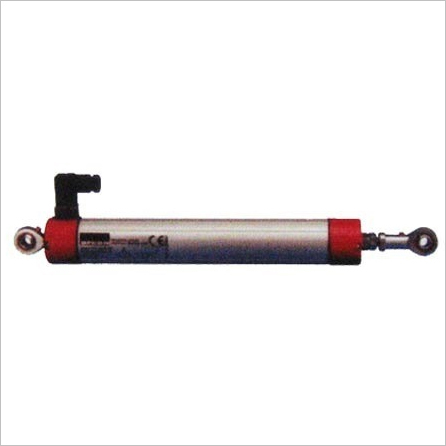
Resistive Transducer
Product Details:
- Resistance 1 k to 10 k (standard range)
- Output Analog / Variable resistance
- Theory Based on variation of resistance with physical changes such as displacement or pressure
- Type Resistive Transducer
- Accuracy 0.5% FS
- Operating Voltage 5V to 24V DC
- Output Voltage 0-5V (typical, dependent on circuit)
- Click to View more
X
Resistive Transducer Price And Quantity
Resistive Transducer Product Specifications
- Based on variation of resistance with physical changes such as displacement or pressure
- 0.5% FS
- Analog / Variable resistance
- 5V to 24V DC
- 0C to +60C
- Resistive Transducer
- 1 k to 10 k (standard range)
- 0-5V (typical, dependent on circuit)
- -20C to +80C
- -30C to +85C
- Panel or PCB Mount
- Wire-wound or cermet
- <1 ms
- IP65
- Aluminium/Plastic
- 0.2% of full scale
- Standard, available in custom sizes
- Solder Terminals or PCB pins
- More than 1 million cycles
Product Description
The resistive transducer is used for providing the quick responses. The voltage either Ac or Dc is effective in calculating the variable resistance. The transducer is useful in the calculation o the temperature, pressure, force etc. It is demanded in the electrical system industries. It is known for its high accuracy, efficacy working principle. Resistive transducer has the long-service life, which means that after installation, it would not require frequent replacements. Our customers give the positive reviews regarding the quality, working of this equipment.
Specification
| Mechanical stroke | 50 to 500 mm |
| Resistance | 5 or 10 k ohm |
| Linearity | +-0.1% to +-0.5% |
| Mechanical life | 10x70 deg. Cycle |
| Case material | Anodized aluminum |
| Mechanical fixing | 2 ball joints |
High-Precision Measurement and Robust Design
Engineered with advanced materials and a wire-wound or cermet contact mechanism, this resistive transducer achieves high precision through excellent linearity and accuracy. The IP65-rated aluminium or plastic housing provides resistance against dust and water, ensuring reliability in demanding applications such as automation, robotics, and process monitoring.
Flexible Mounting and Versatile Connectivity
Installation is straightforward, as the transducer supports both panel and PCB mounting options. Connection is simplified by solder terminals or PCB pins, enhancing adaptability in various circuit designs. Its analog output integrates seamlessly into modern and legacy systems alike, suitable for a broad range of industrial and commercial uses.
FAQs of Resistive Transducer:
Q: How does the resistive transducer respond to physical changes like displacement or pressure?
A: The transducer operates on the principle that its resistance changes in response to physical stimuli, such as displacement or pressure. This variation in resistance can be precisely tracked as a continuous analog signal or variable voltage output, enabling accurate monitoring of the parameter being measured.Q: What benefits does the IP65 ingress protection rating provide?
A: An IP65 rating ensures the transducer is dust-tight and protected against water jets, making it suitable for use in environments where exposure to dust, moisture, or moderate water splashes may occur, thereby extending operational reliability and lifespan.Q: When should I choose a wire-wound versus a cermet contact type for my application?
A: A wire-wound contact is ideal for applications demanding superior linearity and durability under frequent movement, while a cermet contact provides stable performance in environments where electrical noise resistance and longevity are critical.Q: Where can this resistive transducer be installed?
A: You can mount the transducer on panels for equipment monitoring or directly onto PCBs for integration into compact electronic assemblies. Its flexible mounting options suit diverse industrial, laboratory, or OEM applications.Q: What is the process for connecting the transducer to my system?
A: The transducer offers solder terminals or PCB pins, allowing for simple electrical integration. Depending on your setup, connect it directly to your board or wiring harness, ensuring correct polarity and secure attachment for consistent signal output.Q: How does the transducers quick response time enhance process monitoring?
A: With a response time of less than 1 millisecond, the transducer accurately provides real-time feedback on measured parameters. This speed helps operators or automated systems promptly react to changing conditions, increasing process efficiency and safety.Tell us about your requirement

Price:
Quantity
Select Unit
- 50
- 100
- 200
- 250
- 500
- 1000+
Additional detail
Mobile number
Email

Other Products in 'Industrial Transducer' category


 Send Inquiry


Our Products
- Band Heaters
- Cartridge Heaters
- Hot Runner Heaters
- Infrared Heaters
- Tubular Heaters
- Industrial Thermocouples
- Manifold Heaters
- Industrial Controllers
- Strip Heaters
- Cast-in-Heaters
- Roller Heaters
- Heating Equipment & Control Panels
- Industrial Equipments
- Industrial Transducer
- Industrial Furnaces
- Immersion Heater
- Heating System


M-5, Thiru-Vi-Ka Industrial Estate, Guindy,Chennai - 600032, Tamil Nadu, India

Mr. S. Selvaraj
(Managing Partner)
Mobile :07313726198
 Send Inquiry
 Send SMS
Developed and Managed by Infocom Network Private Limited.
 English
 Spanish
 French
 German
 Italian
 Chinese (Simplified)
 Japanese
 Korean
 Arabic
 Portuguese